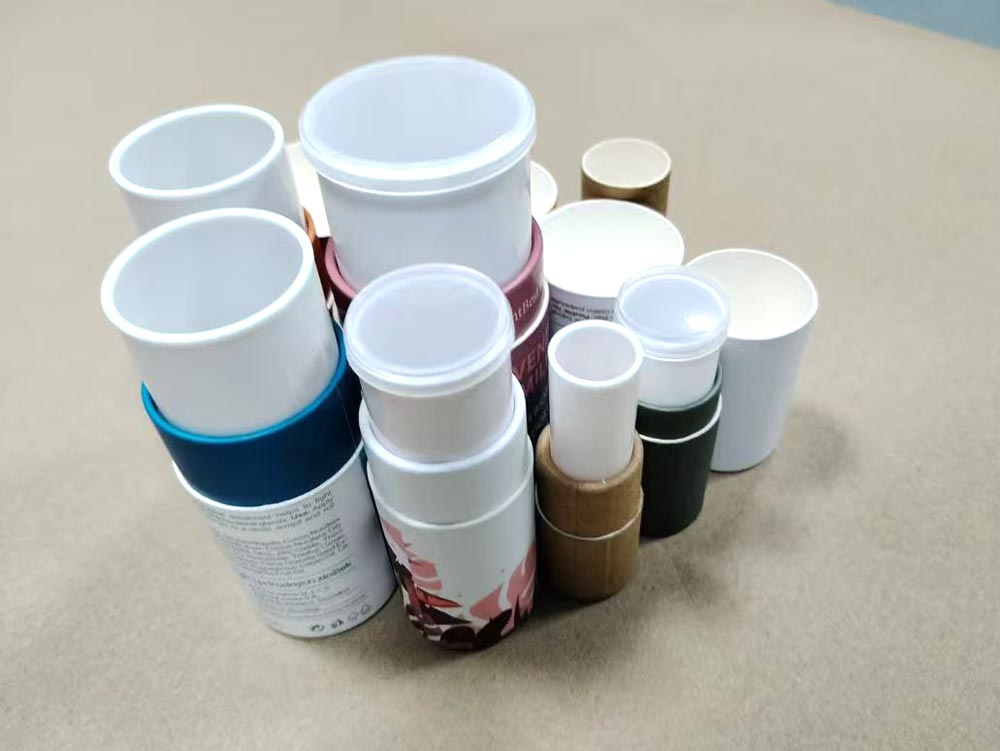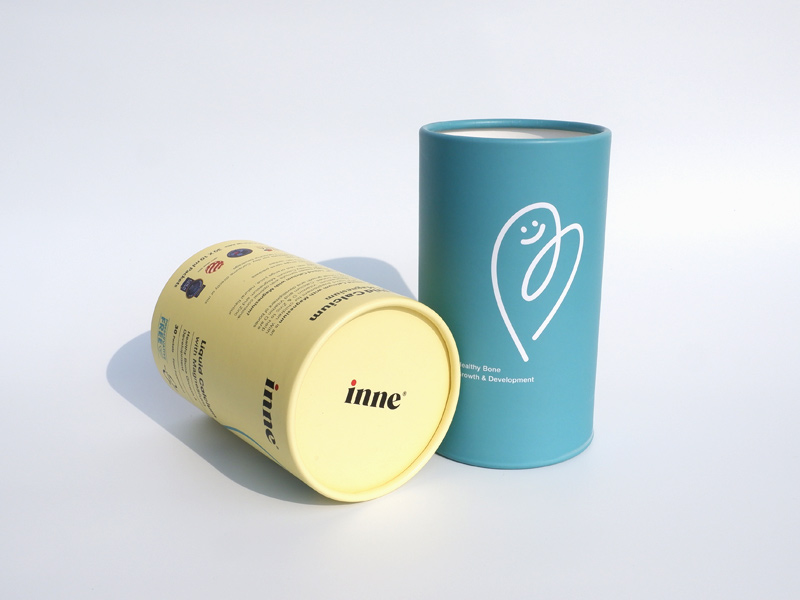

When your product is sensitive to the world—oxygen, moisture, and light—standard paper packaging often falls short. This is where custom composite cans step in. As a manufacturer, we don’t just see them as tubes; we see them as high-performance “storage vaults” designed to extend shelf life while maintaining a premium retail look.
If you are packing coffee, infant formula, luxury snacks, or high-end supplements, you aren’t just looking for a container—you are looking for a barrier. Here is how composite technology helps you win the battle against spoilage, and more importantly, how to handle the technical side of production.
1. What exactly is a Composite Can?
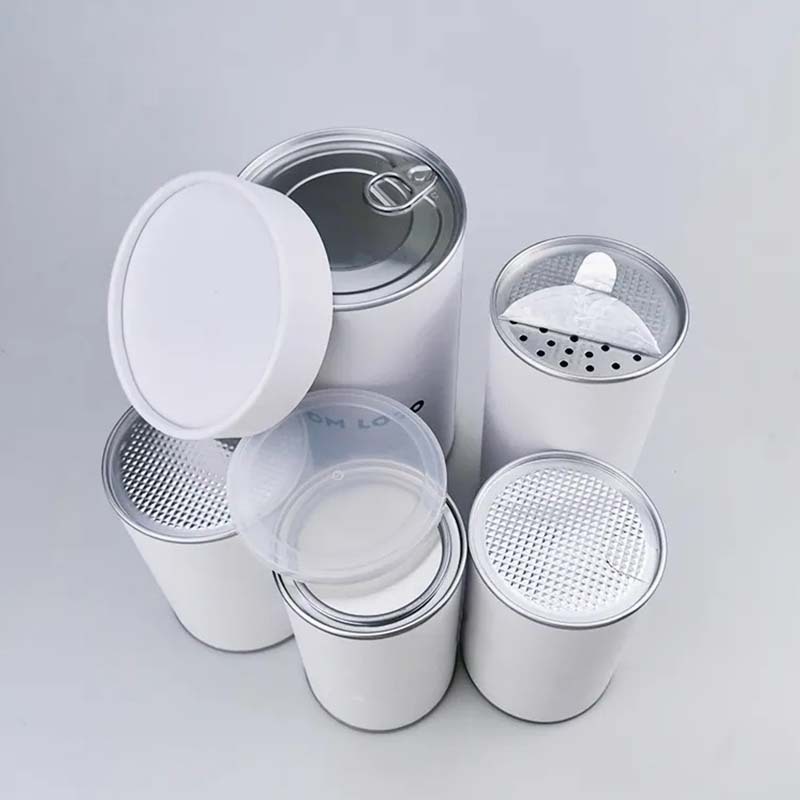
Unlike a standard paper tube made solely of paperboard, a custom composite can is a multi-material hybrid. It is constructed from several functional layers spirally wound together to create a fortress for your product:
The Core: High-strength recycled paperboard for structural rigidity.
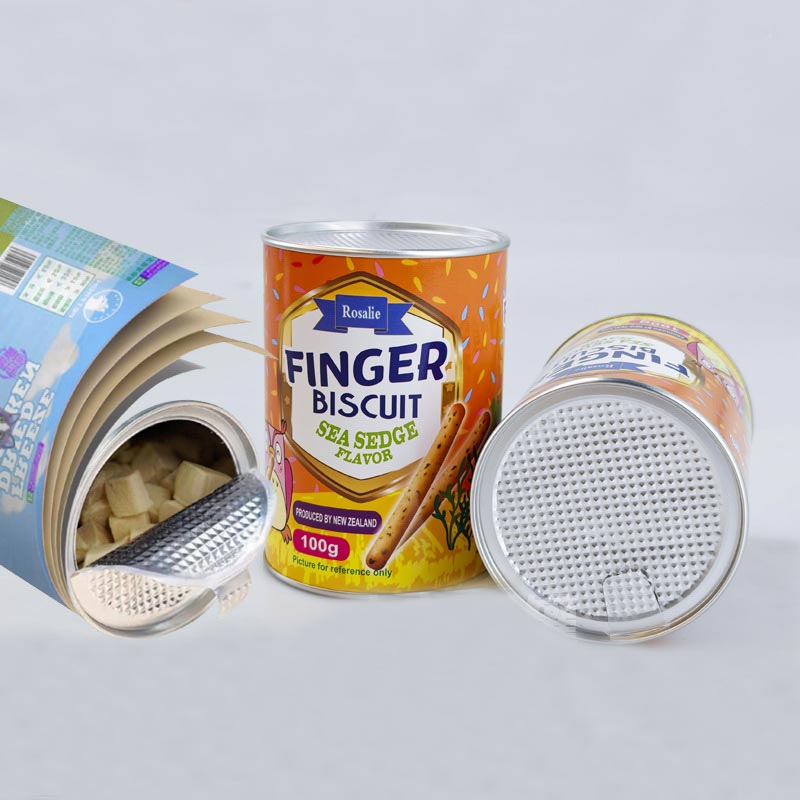
The Inner Liner: A high-barrier aluminum foil or specialized polymer (like PE) that creates a zero-permeability seal.
The Ends: Traditionally finished with a metal bottom and an Easy-Open End (EOE) or a peel-off foil membrane at the top.
2. The Barrier Solution: Mastering WVTR and OTR
The primary reason brands switch to custom composite cans is to achieve a level of protection that standard paper simply cannot provide. To quantify this, we look at two critical performance metrics that determine your product’s shelf life:
WVTR (Water Vapor Transmission Rate): This measures how much moisture can seep through the tube wall over 24 hours. For sensitive products like protein powders or dried snacks, we engineer our composite cans to achieve a WVTR of less than 0.5g/m²·day (at $38^\circ C, 90\% RH$). This ensures your product stays crisp and free-flowing even in humid tropical climates.
OTR (Oxygen Transmission Rate): Oxygen is the enemy of flavor, causing oils to go rancid and coffee to lose its aroma. By utilizing a high-micron aluminum foil liner and mechanical seaming, our custom composite cans can reach an OTR as low as 0.1cc/m²·day·atm. This is the standard required to keep high-fat or nitrogen-flushed products fresh for 18 to 24 months.
Hermetic Sealing: In our factory, we use advanced seaming technology to attach metal lids, creating an airtight environment that maintains these WVTR and OTR levels consistently across every batch.
3. The Reality Check: The Seaming Machine Factor
Here is the part most suppliers won’t tell you: Custom composite cans with metal lids require a seaming machine to close. Unlike a simple slip-on lid, the metal or foil “Easy-Open End” must be mechanically crimped onto the tube body to maintain the low OTR/WVTR levels mentioned above.
For Small-Scale Startups: You may need a tabletop semi-automatic seamer. We can help you spec a machine that seals 10-15 cans per minute to get you started.
For Established Lines: We ensure our cans are manufactured to the precise tolerances (flange width and body hook) required for your existing high-speed rotary seamers.
The “Pre-Sealed” Alternative: We can provide cans with the bottom already seamed on. You fill from the top and use a plastic overcap—though keep in mind, without a top-seamed foil membrane, you will lose the high-performance oxygen barrier.
4. How it Helps You: The “Best of Both Worlds” Advantage
Lower Shipping Costs: Composite cans are significantly lighter than traditional all-metal tins. This reduces your freight costs and carbon footprint while providing the same “industrial” protection.
Uninterrupted Branding: Unlike flat pouches that sag or wrinkle on the shelf, custom composite cans stand tall and rigid. You get a 360-degree “billboard” that stays perfectly smooth, ensuring your brand looks premium from every angle.
Food Safety Compliance: We manufacture these in a controlled environment using food-grade adhesives, ensuring your product remains pure and uncontaminated.
A Manufacturer’s Advice for Your Launch
Transitioning to custom composite cans is a commitment to quality. My best advice? Think about the “Close” before you “Open.” Before we start production, let’s talk about your filling process and your barrier requirements. Do you have a target WVTR? Are you planning to nitrogen-flush?
Ready to upgrade your shelf life? We offer “Barrier Test Bundles” of our high-performance tubes. Reach out today, and let’s find the perfect layer-by-layer specs to keep your product as fresh as the day it was made.