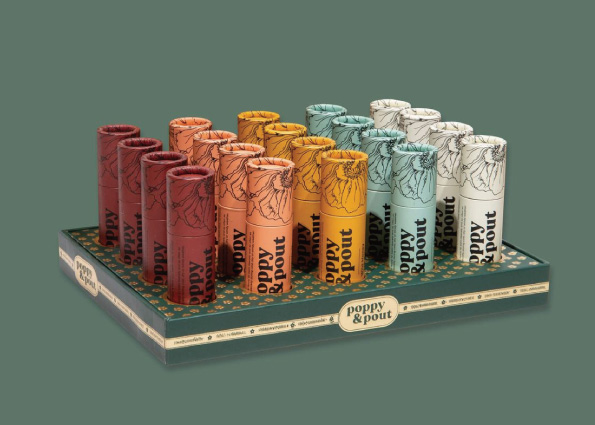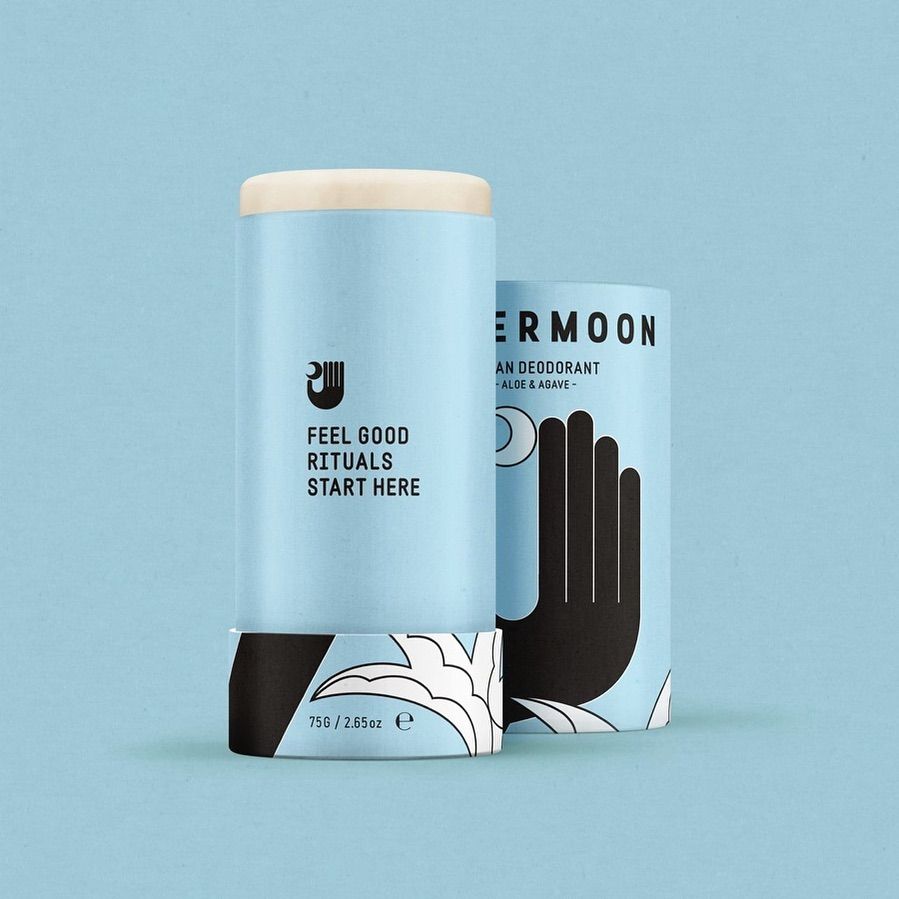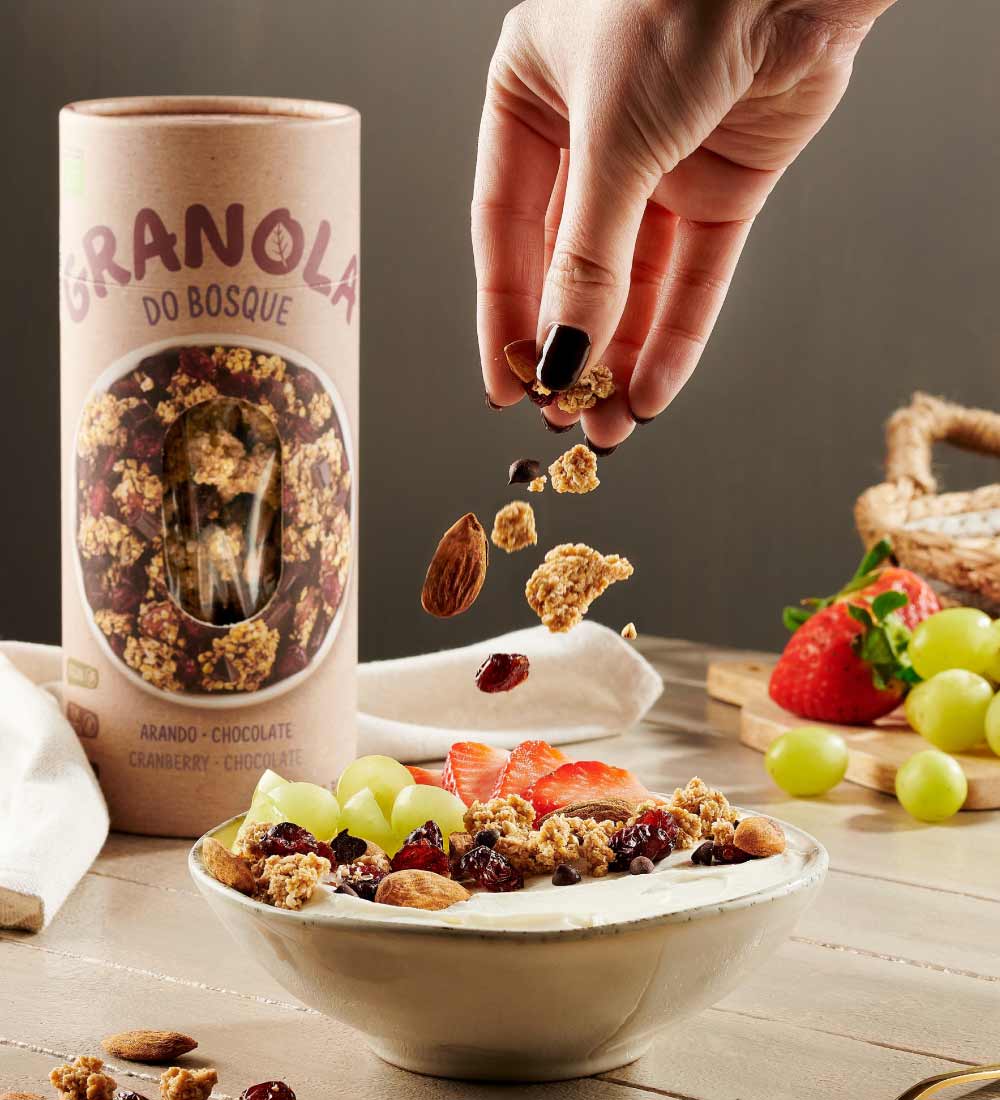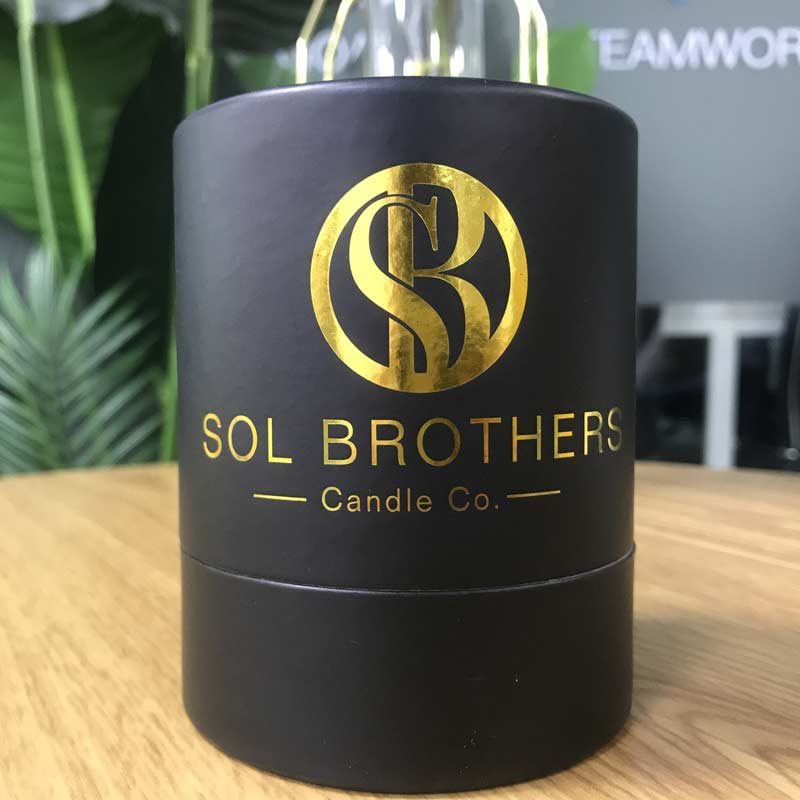

Cylindrical packaging looks great on a shelf.
The round shape gives a product a different look from the usual rectangular box, and the entire outside surface can be used for branding and printing. That’s one reason paper tubes are used for everything from candles and coffee to cosmetics, tea, spices, and gift packaging.
But there is one problem that usually becomes obvious only after the packaging starts being handled: round packages are not naturally good at stacking.
Put two tubes with the same diameter on top of each other and they may look stable at first. Move the stack slightly, however, and the top tube can start to slide. Add more layers, product weight, vibration, or a smooth laminated surface, and the problem becomes much more noticeable.
This can be frustrating for brands that want to use vertical stacking in a warehouse or create a multi-layer retail display.
And there is another requirement we hear quite often:
“Can we make the tubes stack better without changing the appearance of the printed tube?”
In many cases, the answer is yes.
The solution does not have to involve changing the entire tube. Depending on the construction, there are several ways to introduce a small mechanical positioning feature into the package.
In this article, we’ll look at three options for stackable paper tube packaging and, more importantly, when each one makes sense.
Why Standard Paper Tubes Are Difficult to Stack
The reason is actually quite simple.
A standard cylindrical tube normally has a consistent outside diameter. The top and bottom surfaces are relatively flat, so when one tube sits on another, there is nothing specifically designed to keep them in place.
The two surfaces are simply touching each other.
There may be some friction, but there is no real mechanical lock.
That’s fine when a single package is sitting on a shelf. It becomes a different story when you want to stack several packages together.
For example, a stack may remain stable when nobody touches it. But a small sideways movement can cause the top tube to shift. Once one tube moves, the rest of the stack can follow.
The problem becomes more serious when:
- several packages are stacked together;
- the product inside is relatively heavy;
- the tube has a smooth finish or lamination;
- the products are moved frequently;
- the packages are transported over long distances; or
- the tubes need to be displayed vertically at retail.
So if stacking is part of the packaging requirement, it is better to think about it during the structural design stage rather than trying to solve it after the tube has already been produced.
Why Does Stackability Matter?
For some projects, stacking is simply a convenience. For others, it can directly affect storage, shipping, and how the product is displayed.
Warehouse Storage
Imagine storing hundreds or thousands of cylindrical packages.
If the tubes cannot be stacked securely, the warehouse team may need to limit the stacking height. A stack that is too high can become unstable, particularly when products are moved around.
That means more floor or shelf space may be needed for the same quantity of products.
For high-volume products, this is not just a packaging design issue. It can become a storage efficiency issue.
Transportation
Transportation creates another challenge.
A stack that looks perfectly stable on a worktable may behave very differently inside a truck or shipping container.
During transportation, packages experience vibration, turning, braking, acceleration, and occasional impact. If there is nothing preventing the tubes from moving sideways, small movements can gradually build up.
This is particularly important when the packaging is shipped in large quantities or over long distances.
Retail Display
Retail is another reason some brands ask about stackable cylindrical packaging.
A cylindrical package can look very attractive when several units are displayed together. But if the tubes slide around, it becomes difficult to create a clean multi-level display.
Instead of having five or six packages neatly stacked, the retailer may have to place them side by side or use a separate display fixture.
For brands that want the packaging itself to do more of the work, adding a simple positioning feature can be worthwhile.
Before Choosing a Stacking Solution, Look at the Tube Structure
There isn’t one interlocking design that works for every paper tube.
The first thing we normally look at is the construction of the tube.
Is it a single-piece tube? A two-piece telescopic tube? Does it use a metal lid? Is the bottom made from paper or another material?
The product itself also matters.
A lightweight cosmetic product does not put the same load on a stack as a heavier food product. Similarly, a package that only needs to be stacked three units high has different requirements from one that needs to be stacked eight or ten units high.
It’s also worth deciding where the stability is actually needed.
Are you trying to:
- make warehouse stacking easier?
- reduce movement during shipping?
- create a stable retail display?
- or all three?
These questions help narrow down the right structure before any tooling or production changes are made.
3 Practical Solutions for Stackable Paper Tube Packaging
There are three approaches we commonly consider for this type of requirement.
The first two add a small component to the tube. The third changes the tube structure itself.
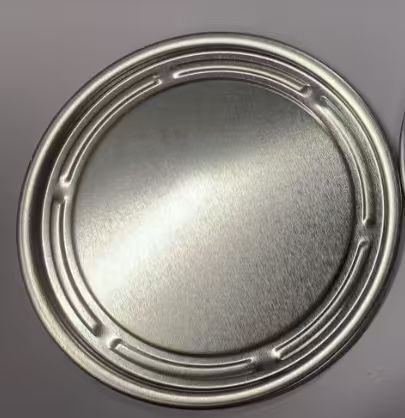
1. Metal Bottom Lid With Locking Points
If the paper tube already uses a metal bottom lid, one option is to make the lid do more than simply close the package.
A customized metal lid can be designed with small positioning or locking points. When another tube is placed on top, those points help keep the upper package from sliding sideways.
The idea is quite straightforward: instead of relying only on the contact between two flat surfaces, the bottom of one package gives the next package a defined position.
When Does This Make Sense?
This option is worth considering when the packaging already has a metal lid or when the product benefits from a stronger bottom structure.
It can work well for applications such as:
- food packaging;
- candle packaging;
- premium gift packaging;
- cosmetics; and
- relatively heavy products.
What Are the Advantages?
The biggest advantage is strength.
A properly designed metal locking feature can provide a more positive mechanical connection than friction alone. It can also be integrated into the existing metal lid rather than adding something to the outside of the printed tube.
For brands that already like the look of a metal lid, this can be a relatively natural way to improve stacking.
What Should You Watch Out For?
The trade-off is cost and complexity.
A customized metal lid may require additional tooling, and the lid itself becomes a more specialized component.
So this is not necessarily the first choice for a project that is trying to minimize components or keep the packaging completely paper-based.
2. A Small Paper Positioning Ring
If adding a metal component isn’t desirable, another possibility is a small paper positioning ring.
This is a much simpler-looking solution, but the dimensions still need to be carefully controlled.
The ring is attached to the bottom of the tube and creates a small positioning feature. When another tube is placed against it, the ring helps keep the packages aligned instead of allowing them to slide freely.
You can think of it as giving the cylindrical package a small “guide” for the next tube.
Why Consider a Paper Ring?
The obvious benefit is that it keeps the additional component paper-based.
For brands that are already using paper tube packaging and want to minimize the use of other materials, this can be appealing.
It also allows the main printed area of the tube to remain essentially the same. The positioning feature is located where it is less noticeable.
Where Can It Be Used?
Depending on the tube dimensions and construction, this approach can be considered for:
- cosmetics;
- candles;
- tea and coffee;
- food products;
- gift packaging; and
- other paper tube applications.
The Important Part: Size and Tolerance
This is where the design becomes more technical.
A positioning ring that is too small may not do enough to prevent movement.
A ring that is too large may make assembly difficult or create too much interference between the packages.
The way the ring is attached also matters. If it is not bonded properly, repeated handling can eventually cause it to loosen.
For that reason, the ring should be designed as part of the tube rather than simply added to an existing tube at the last minute.
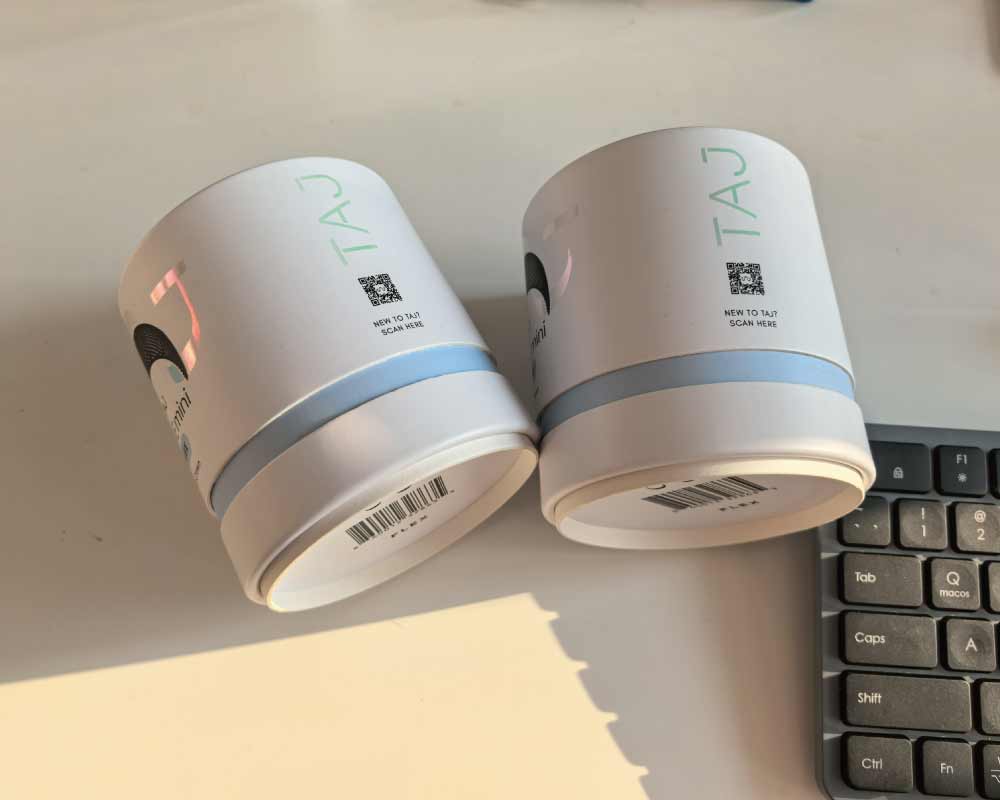
3. Rolled-Edge Interlocking for Two-Piece Tubes
The third option is a little different, and it is often the most interesting one when the tube construction allows it.
Instead of adding another component, the tube itself is modified.
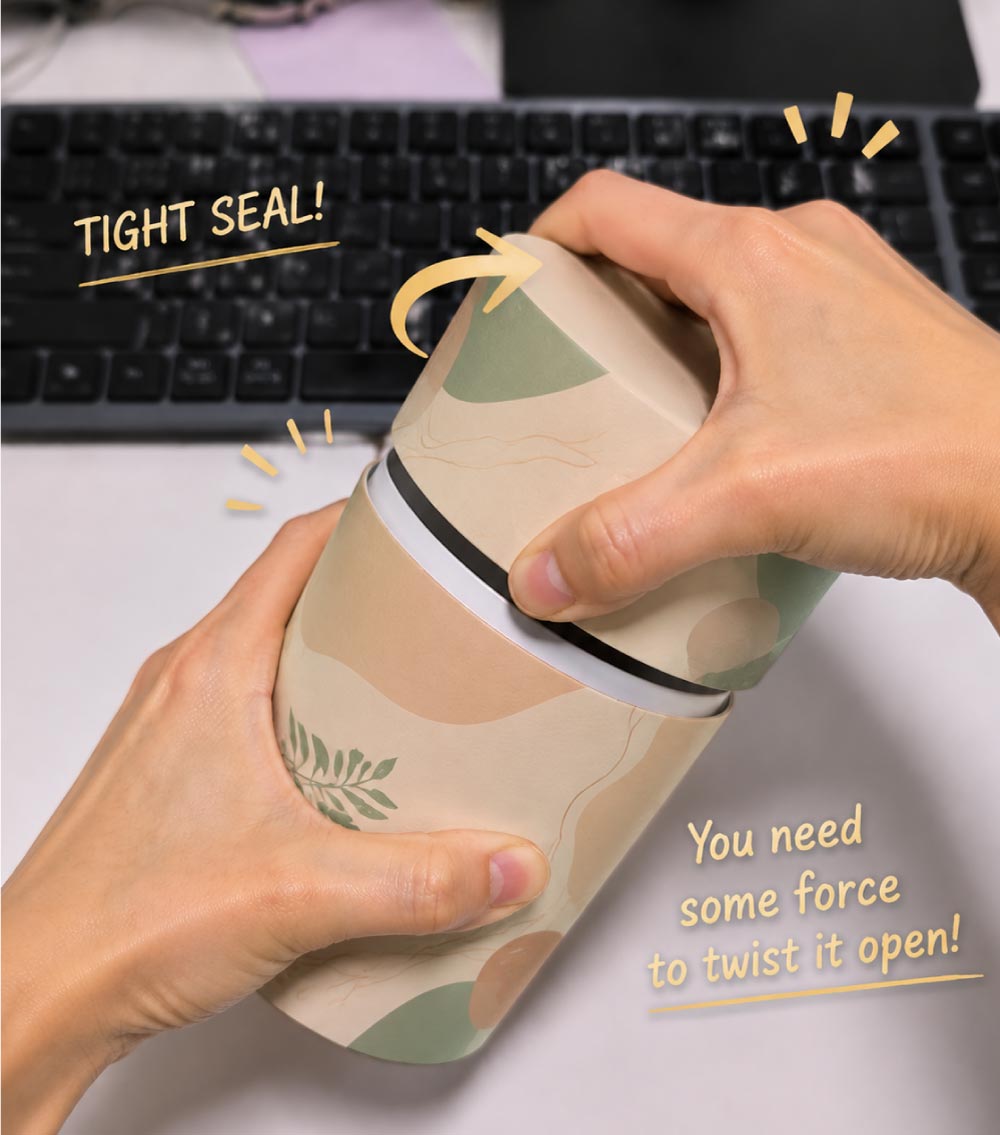
This approach is mainly suited to two-piece telescopic paper tubes, where one tube section fits into another.
By adjusting the diameter and rolled-edge dimensions of the tube sections, it is possible to create a small mechanical engagement between packages when they are stacked.
In simple terms, one part of the tube acts as the positioning feature for the next package.
The Big Advantage: No Extra Component
This is probably the biggest reason to consider this design.
There is no additional metal ring and no separate paper positioning ring.
The stacking feature comes from the tube itself.
For a brand that wants a clean package and doesn’t want to add another assembly step, this can be a very attractive solution.
It can also be useful when the printed body of the tube needs to remain visually uninterrupted.
But There Is a Catch
This method requires more attention to manufacturing tolerances.
The final fit can be influenced by:
- paper thickness;
- tube diameter;
- winding accuracy;
- cutting accuracy;
- rolled-edge dimensions;
- adhesive thickness; and
- the fit between the two tube sections.
A difference of a small amount in diameter can change how the interlocking structure behaves.
Too loose, and the tubes may still slide.
Too tight, and the tubes may become difficult to assemble or separate.
That’s why we would not recommend choosing this structure from a drawing alone. It should be prototyped and tested with the actual tube material and production process.
When Is It a Good Choice?
This approach is particularly worth discussing when you’re developing a two-piece telescopic tube and want to improve stacking without adding another component.
It can provide a clean solution, but it needs to be developed carefully.
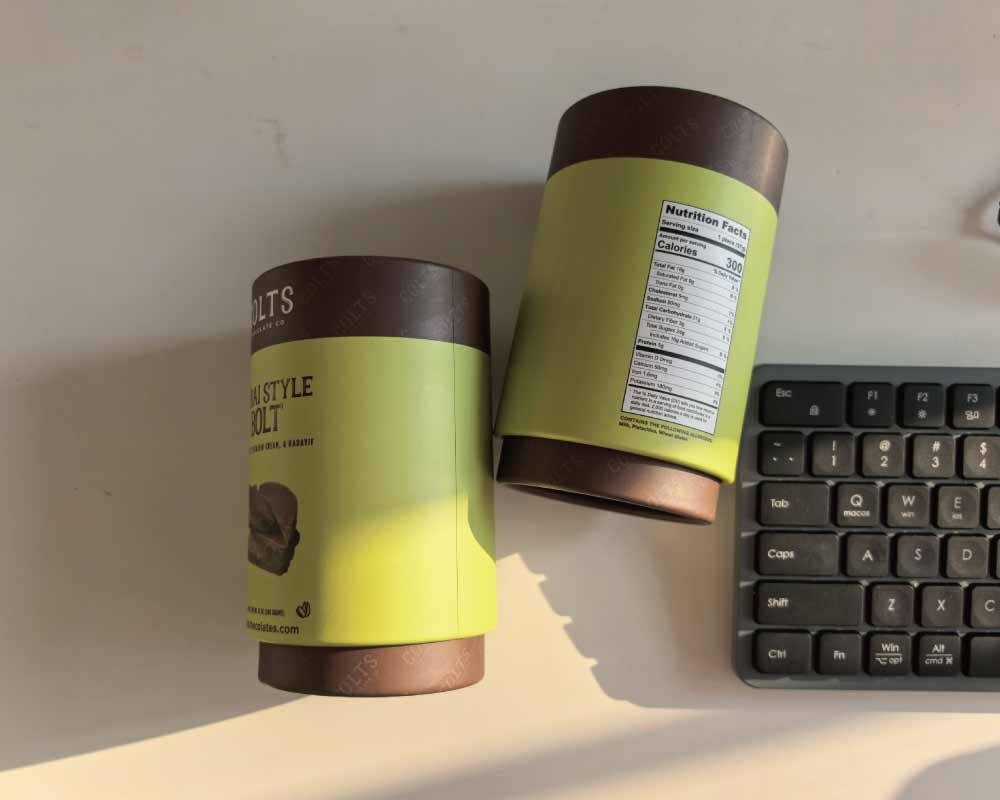
Which Stacking Solution Is Right for Your Tube?
Here is a quick comparison:
| Solution | Best Suited To | How It Works | Main Benefit | Main Consideration |
|---|---|---|---|---|
| Metal lid with locking points | Tubes with metal bottoms/lids | Locking points help position the next tube | Strong and stable | Higher component/tooling cost |
| Paper positioning ring | Suitable paper tube structures | Ring creates a positioning point | Paper-based and lightweight | Ring size and bonding need control |
| Rolled-edge interlocking | Two-piece telescopic tubes | Tube geometry creates mechanical engagement | No additional component | More sensitive to production tolerances |
There isn’t necessarily a “best” option.
For example, if you already have a metal lid, modifying the lid may be the simplest route.
If you want to stay as paper-based as possible, a positioning ring may be more suitable.
If you are developing a two-piece telescopic tube and want to avoid additional components altogether, the rolled-edge approach is worth exploring.
The important thing is to choose the structure before finalizing the production design.
Don’t Skip the Stacking Test
One thing we would strongly recommend is testing the actual finished package.
An empty tube can behave very differently from a filled package.
The product inside changes the weight, center of gravity, and pressure on the packages underneath.
So instead of asking only:
“Can these two empty tubes stack?”
it’s better to ask:
“Can the finished packages stack at the height we actually need, and will they remain stable during handling and transportation?”
Test the Number of Layers You Actually Need
If the final application requires six packages to be stacked, test six.
If it requires ten, test ten.
Don’t assume that a structure that works for two or three packages will automatically work for a much taller stack.
Test With the Real Product Weight
Whenever possible, use the actual product or a representative load.
This is particularly important for heavier products such as food, candles, powders, or other dense products.
Think About Transportation
If the packaging will be shipped, static testing is only part of the picture.
The packages should also be considered under vibration and movement.
A structure that works perfectly on a table may not behave the same way after several hours or days of transportation.
A Note About Manufacturing Tolerances
This is especially important for the rolled-edge interlocking design.
Paper tubes are manufactured from flexible sheet materials, so the final dimensions are influenced by several production steps.
Paper thickness, winding, cutting, edge forming, adhesive application, and assembly all contribute to the final fit.
That’s why two tubes that look identical on a drawing can sometimes behave slightly differently during physical testing.
This is not necessarily a problem. It simply means that the design needs to account for realistic manufacturing tolerances.
A good prototype test can reveal whether the fit needs to be adjusted before production starts.
In other words, don’t design the interlocking structure only on paper. Make it, stack it, move it, and test it.
Frequently Asked Questions
Can I make cylindrical paper tubes stackable without changing the printed surface?
In many cases, yes. The positioning feature can be placed at the bottom or within the structural area of the tube, allowing the main printed surface to remain largely unchanged.
Will a stacking feature make the package taller?
Not necessarily. It depends on the structure. Some solutions add a small component, while others use the existing tube geometry to create the positioning effect.
The finished height should be confirmed during prototype development.
Can a single-piece paper tube use the rolled-edge interlocking design?
The rolled-edge approach is generally more suitable for two-piece telescopic tubes because the design relies on the relationship between the two tube sections.
A single-piece tube may need a different approach, such as a bottom ring or customized lid.
Will an interlocking structure affect the appearance of my packaging?
It doesn’t have to.
For many designs, the interlocking feature can be positioned at the bottom of the package so that the main printed body remains unchanged.
The exact result depends on the tube construction and the required stacking mechanism.
Does stackable paper tube packaging remain recyclable?
That depends on the complete packaging construction.
If the design uses additional paper components, it may be easier to maintain a paper-based structure. If metal or other materials are added, the complete material combination should be evaluated according to the intended recycling system.
How can I find the right stacking solution for my project?
Start with the basic information:
- Tube diameter
- Tube height
- Single-piece or two-piece construction
- Product weight
- Lid or bottom style
- Required stacking height
- Storage and transportation conditions
- Retail display requirements
With these details, the appropriate structure can be evaluated much more accurately.
Final Thoughts
Cylindrical packaging is attractive, versatile, and highly customizable. But if you need to stack it, the round shape needs a little more thought.
The good news is that you don’t necessarily have to sacrifice the appearance of the package to get better stability.
A customized metal lid can provide a strong positioning feature. A small paper ring can add a simple paper-based locking point. And for suitable two-piece telescopic tubes, the rolled edge itself can be modified to create an interlocking structure without adding another component.
The right answer depends on the package.
That’s why we recommend starting with the actual tube structure, product weight, stacking requirement, and intended use rather than choosing a locking method based on appearance alone.
If you’re developing stackable paper tube packaging and aren’t sure which structure would work best, send us your tube diameter, height, construction, product weight, and preferred lid style. We can review the requirements and help you determine which approach is worth prototyping before moving into mass production.