In custom paper tube packaging production, we often hear customers say this paper tube packaging problem:
“The packaging looked fine when we received it, but after some time, the lid became difficult to open.”
At first, this may seem like a simple paper tube packaging problem on fitting between the lid and the tube body.
However, after years of producing custom paper tube packaging, we have learned that some packaging issues are not always caused by one single factor.
Sometimes, the characteristics of paper itself can influence the final performance.
This is one of the paper tube packaging problems that requires manufacturers to look beyond the surface and understand how materials behave during production and after delivery.

A Customer Feedback That Made Us Look Deeper Into the Problem
Recently, we received feedback from a customer regarding a batch of cylindrical paper packaging problems.
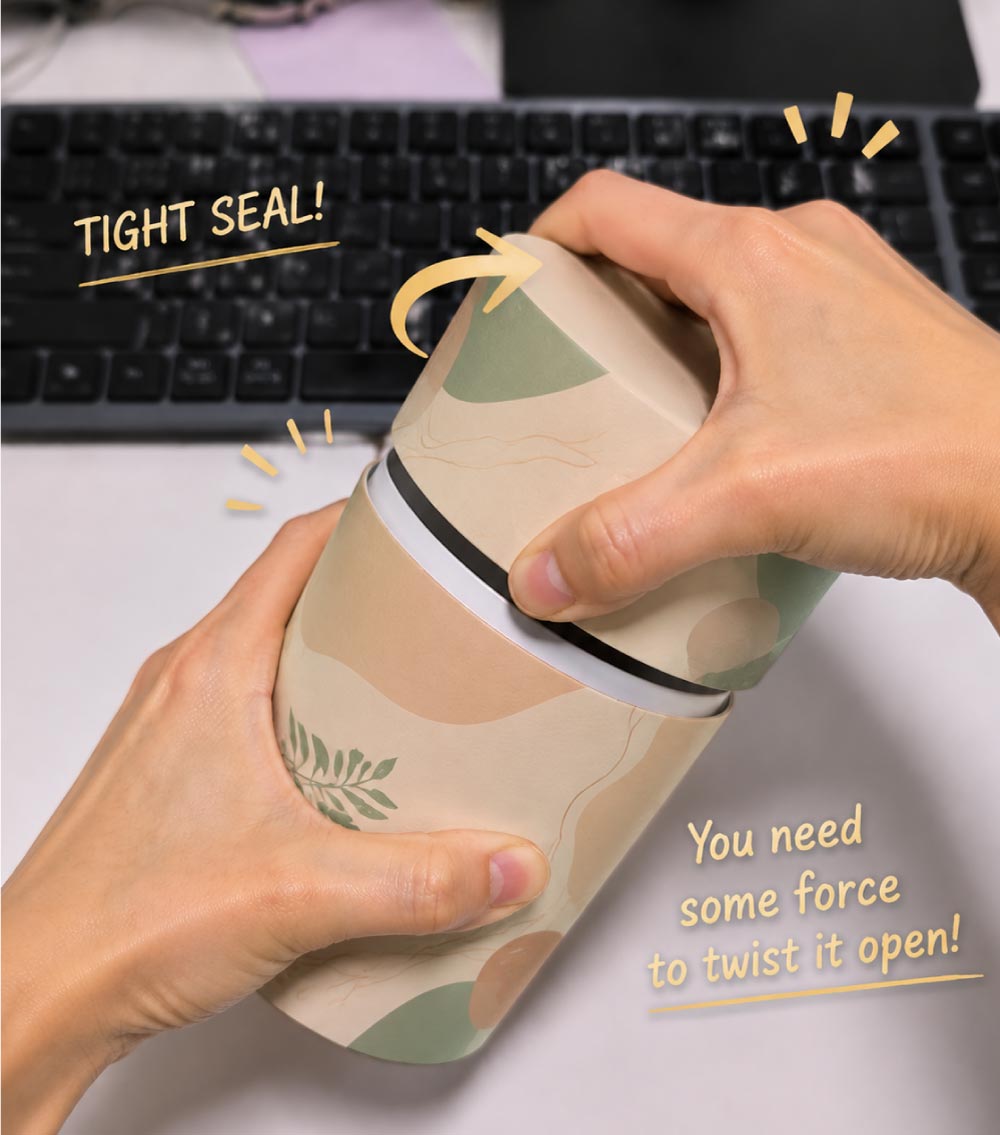
The customer mentioned that the upper lids were too tight. When twisting the lid to open the package, it required more force than expected.
The first thing we considered was whether there was a problem with the matching between the lid and the tube body.
After checking the situation, we found something interesting:
Some pieces were fitting normally, while others were tighter.
This observation helped us understand that the issue was unlikely to be caused only by the mold or size matching.
We needed to look deeper into the production process.
The Hidden Cause Behind Tight Paper Tube Packaging Lids
One important factor we considered was moisture control during the paper tube manufacturing process.
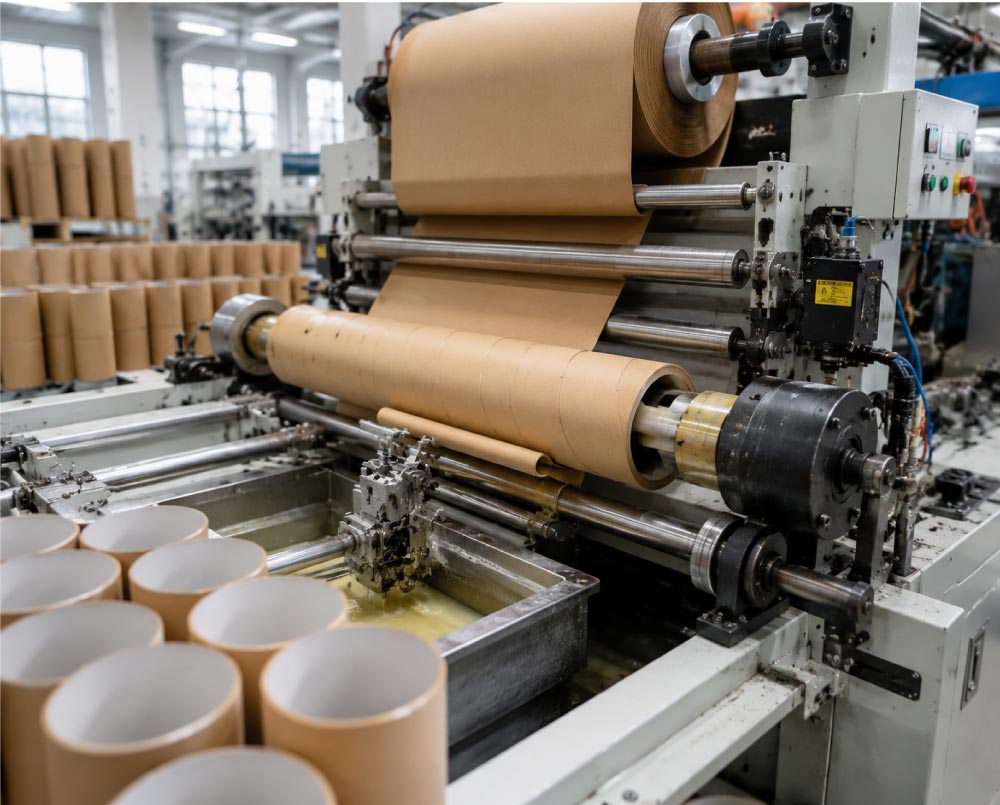
A paper tube is created by rolling multiple layers of paper together with adhesive.
During this process, the glue introduces moisture into the paper structure.
After forming the tube, sufficient drying time is required to allow the paper to stabilize before moving to the next production stage.
This step is extremely important because paper is a natural fiber material.
Unlike plastic or metal packaging, paper reacts to changes in humidity.
If the moisture level inside the paper tube is not properly controlled during drying, the packaging may appear completely normal during assembly.
However, after shipment and exposure to different environmental conditions, the paper may absorb moisture from the air and slightly expand.
Although the dimensional change may be very small, it can affect the fitting between the lid and the tube body.
As a result, a paper tube packaging lid that originally fits correctly may become tighter after delivery.
Why Does The Paper Tube Packaging Problem Not Happen to Every Piece?
This is another common question.
If paper tube packaging problems are related to moisture, why are some packages normal while others become tight?
The reason is that paper is a natural material.
Small differences may occur due to:
- paper fiber characteristics;
- moisture distribution;
- drying conditions;
- storage environment;
- transportation conditions.
These factors can create small dimensional variations between individual pieces.
For this reason, controlling stability during paper tube packaging manufacturing is essential.
How Can This Paper Tube Packaging Problem Be Solved?
When a customer has already received the packaging, the solution needs to balance effectiveness, cost, and practicality.
Depending on the situation, there are usually two possible approaches.
Option 1: Adjust the Existing Lid
If the condition allows, the existing lid structure can sometimes be adjusted.
By slightly reducing the tightness of the lid fitting area, additional space can be created to improve the opening experience.
This method can help reduce waste and avoid completely replacing the packaging.
Option 2: Produce New Lids
In some cases, producing new lids is the better solution.
However, when replacing only the lids, another important issue needs to be considered:
Color consistency.
For packaging using spot color printing, matching the original color is usually easier.
However, for CMYK printing, color consistency requires more careful control.
Factors such as:
- printing parameters;
- paper materials;
- ink performance;
- production conditions;
can influence the final appearance.
A new lid should not only fit correctly but also maintain visual consistency with the original packaging.
What Do We Learn From This Experience?
This experience reminded us that paper tube packaging problems are often related to more than just dimensions.
Packaging performance depends on many details:
- material selection;
- production process;
- moisture control;
- drying time;
- environmental conditions.
A successful custom paper tube packaging solution requires not only good design but also a deep understanding of how paper behaves.
For packaging manufacturers, every customer feedback is an opportunity to improve production control and provide more reliable solutions.
Conclusion
A paper tube packaging lid that becomes too tight after delivery is not always caused by incorrect sizing.
Material characteristics, humidity, and production control can also influence the final fitting performance.
Through continuous improvement and experience, we continue to optimize our manufacturing process and help customers create packaging that is not only visually attractive but also stable and functional.
Because good packaging is not only about how it looks — it is also about how it performs.